

WINE CRITICISM
 The emergence of wine critics and an estimated jury in the world of winemaking has greatly simplified the lives of ordinary consumers (you can safely rely on the assessment of an independent expert and not waste time tasting bad wine), which cannot be said about the producers. In the literal sense, critics are able to decide the fate of sales, and hence the production of wine in general: self-respecting wine boutiques try to work only with those wines that received good reviews from an authoritative jury. Leading world critics with their opinions are able to shape the fashion for a particular brand of wine.
WINE CRITICISM
The profession of wine critic is almost identical to the taster, with only one significant difference: the taster assesses for the producer at the production stage, and the critic for sales. That is, the assessment of criticism is directed to the buyer, while the taster – to the winemaker.
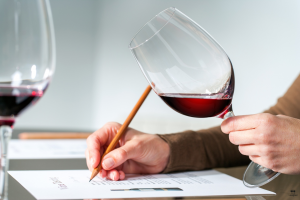
The working tools of such experts are a glass of wine, a pen or a keyboard.
Wine critics are always freelancers who live by publishing books, reviews and articles, master classes. Those representatives who are “at a rate” with the manufacturer, do not enjoy the confidence of the buyers: it is difficult to believe in the objectivity and impartiality of the conclusions. Most professional critics try wines “blindly” to reduce the impact on their opinions of brand name or taste preferences.
In addition to the verbal evaluation of the drink, there is also an estimated digital scale – wine rating. No matter how hard they try to conduct tasting, it still remains the subjective assessment of one person, so the rating always carries the author’s name. The criteria for grading are taste, value, type, and more.
The main and generally accepted systems are:
100-point system of Robert Parker, (100 points – the future classics of winemaking, below 50 – bad wine);
Jensis Robinson’s 20-point scale (20 is a perfect wine, 12 is dull and bad)
as well as, 3 and 5-point systems.